What UK Solo Travellers Should Actually Know About European Budget Flights
What UK solo travellers actually need to know before booking a budget European flight — airport trade-offs, aircraft types, and solo-specific charges explained.
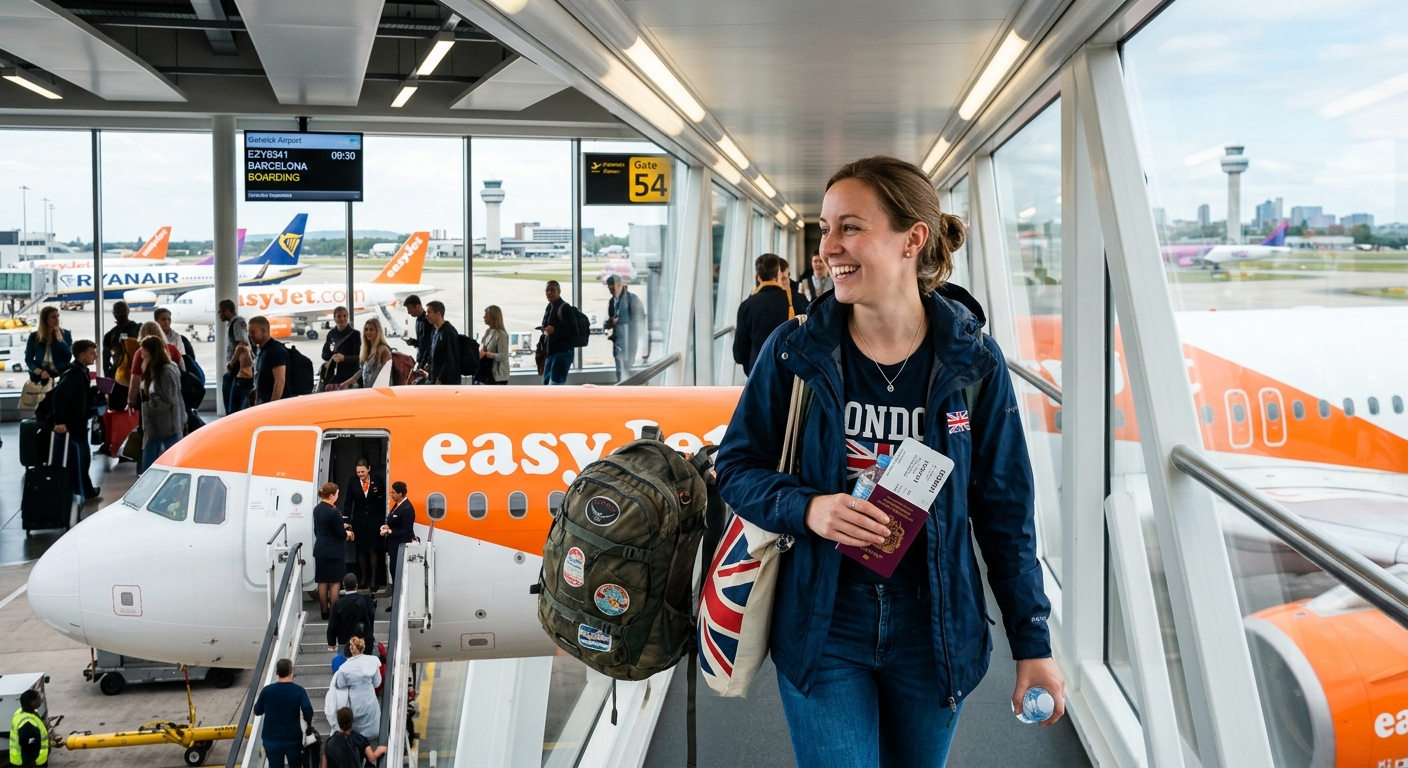
Booking a 48-hour European break looks deceptively straightforward. You find a flight for £34, pick your dates, and expect to pay roughly that. Then checkout loads. The overhead bag is £22 extra. The specific seat costs another £11. Priority boarding, which you did not want but now feel quietly pressured into, is £8 more. By the time you confirm, you have roughly tripled the original figure, and that is before factoring in the transfer from an airport that shares a name with a city it is not actually in. This is not a complaint about budget airlines. It is an observation that flying budget in Europe, specifically as a solo traveller, involves a set of decisions that affect the final price far more than the base fare does. Understanding those decisions before you search is the difference between a trip that costs what you expected and one that costs forty percent more for no discernible reason.
Before You Hit Book
- Regional airports only save money when you price the full door-to-door journey, not just the fare.
- Aircraft type affects cabin width, overhead locker size, and which bag dimensions count as free.
- Solo travellers absorb every optional charge in full. Groups split them. The maths is different.
- Booking bags, seats, and priority boarding in the correct sequence prevents paying for the same thing twice.
- Post-Brexit passport validity rules for Schengen entry have changed and vary by destination country.
The Real Cost of Choosing a Departure Airport
Departure airport selection is treated as a secondary decision by most people booking a short European break. It is not. The airport you fly from determines your ground transfer cost, your journey time to reach it, and frequently the overall quality of the experience on the day.
London Stansted is Ryanair's UK home base. It has the highest frequency of low-cost European routes of any UK airport, and the base fares are often genuinely competitive. The cost is a train from Liverpool Street that runs around £20 each way and takes fifty minutes, plus a terminal experience that is built entirely for throughput. If you live in north or east London, Stansted works well. For anyone starting further out, the maths can easily flip against it.
Luton is the stronger choice for central and eastern European cities. Wizz Air operates an extensive network from there covering Budapest, Warsaw, Bucharest, Sofia, and a range of smaller cities that neither easyJet nor Ryanair prioritises. The bus journey from central London is slower than the Stansted train and involves a shuttle link to the terminal, so factor in at least ninety minutes from zone one on a normal day. Gatwick handles a wider spread of western European leisure routes, with a faster rail connection and a considerably more comfortable terminal.
Manchester, Edinburgh, and Bristol have expanded their low-cost European networks substantially in recent years. For a traveller based in the north of England or Scotland, flying from a regional airport rather than adding a journey down to a London hub is almost always the correct decision. The fares are occasionally higher per kilometre, but the saved ground time and transfer cost compensate reliably.
When a Smaller Airport Is the Smarter Call
There is a specific scenario where a secondary regional airport is clearly the better option for a solo 48-hour trip. It is when the destination airport is itself a secondary one. Many budget routes deliberately avoid the main city airport and land at a smaller facility forty to sixty kilometres from the centre. Flying from Bristol to Girona rather than Barcelona El Prat, for example, involves two quieter airports, both with simpler processes and shorter security queues. The transfer at the destination end is longer, but the combined boarding and security experience is often twenty minutes faster per direction. For a Friday-evening departure where every hour counts, that matters.
What Budget Carriers Actually Fly on These Routes
The three aircraft types that dominate UK-Europe budget flying are the Boeing 737-800, the Boeing 737 MAX 8, and the Airbus A320 family, which includes the A319, A320, and A321. Ryanair operates an almost entirely Boeing 737 fleet. EasyJet and Wizz Air operate Airbus narrowbodies. These are not trivial details.
The Boeing 737 has a narrower cabin than the A320 family. On a full 737-800 in standard Ryanair configuration, the middle seat is noticeably tighter than on an equivalent A320. The A321, used by Wizz Air and easyJet on busier routes, is a longer aircraft with more rows, which tends to mean better seat availability and occasionally lower prices on routes where both carriers operate. Legroom is broadly comparable across all three types and is not a meaningful issue on a flight under two hours. Seat width is the more relevant variable for a solo traveller who ends up in the middle.
Bag size limits are technically standardised per carrier but play out differently in practice. Ryanair's free personal item must fit under the seat in front. The under-seat space on a 737 is marginally smaller than on an A320. If you pack a bag that fits easyJet's free allowance with a centimetre to spare, it may not clear Ryanair's under-seat space without compression. Test the fit at home before you leave.
Budget routes into smaller continental airports often involve parking on the apron rather than docking at a jetway, meaning you walk across the tarmac to board and disembark. In winter this is cold and sometimes wet. The upside is that smaller airports give you a clear, unobstructed view of the aircraft movements around you. At a quieter terminal with time to spare and a direct line of sight to the apron, it is easy to start wondering exactly what is taxiing past. A good reference on how to identify aircraft overhead makes that idle wait considerably more productive.
The Charges That Surface at Solo Checkout
Budget carrier pricing is structured around a base fare that is intentionally low, supported by optional extras priced to be individually justifiable and collectively significant. As a group traveller, you split those costs across multiple bookings. As a solo traveller, every charge lands entirely on you.
Seat selection is the clearest example. A couple has a genuine reason to avoid random allocation, because they might be separated. A solo traveller has no such compulsion. And yet paying for seat selection often makes practical sense on a solo booking, because unsold middle seats and the last-row seats near the toilet are disproportionately assigned to passengers who did not pay to choose. On anything over ninety minutes, paying £5 to £12 for a window or aisle seat is a reasonable call. On a morning departure where you need to deplane fast and catch a connection, it is closer to essential.
Bag policy is where solo travellers are most exposed to unplanned cost. Budget carriers charge for any bag placed in the overhead locker. A bag that fits under the seat in front remains free. If you can pack two nights of clothing, a washbag, and a pair of shoes into a compact 40-litre bag that slides under the seat, you save between £18 and £35 each way. That is a meaningful proportion of the base fare on a short European route. It requires real packing discipline and is more achievable in summer than in January, but it is worth attempting on every trip before defaulting to paying for cabin baggage.
Priority boarding is sold as convenience. It is also the mechanism by which carriers guarantee overhead locker space for passengers who have registered a cabin bag through the app. If you pay for a cabin bag but not priority boarding, you risk boarding late and finding no locker space near your seat, resulting in your bag being gate-checked into the hold. Some carriers charge a gate-check fee on top. The sequence in which you make these decisions at checkout matters more than any individual choice.
Booking in the Right Order
Most of the double-charging on budget bookings happens because steps are completed out of sequence. Follow this order on every solo European booking.
- Search the route on a flight aggregator to identify all carriers and the realistic price range across dates.
- Go directly to the carrier's own website to book, not through the aggregator, to avoid booking fees.
- Decide your bag strategy before adding anything at checkout. Either go under-seat only or commit to a paid cabin bag.
- Select a specific seat at the time of initial booking. Seat prices typically rise in the days after booking is confirmed.
- Add priority boarding only if you have already paid for a cabin bag and want a guarantee of locker space.
- Check in online the moment the window opens, usually 24 to 48 hours before departure, and save your boarding pass to your phone immediately.
UK passport requirements for European travel have changed since 2021. Most Schengen countries require that your passport is valid for the full duration of your stay and was issued less than ten years before the date of entry. Some countries apply additional conditions. The entry requirements on the UK government's foreign travel advice pages are updated per destination and are more reliable than anything you read on a forum or a travel blog. Check your specific destination before every trip, not just the first one.
UK Departure Airports for Budget European Routes
Departure Points Compared for Solo 48-Hour Trips
| Airport | Main Budget Carriers | City Transfer | European Network Strength | Best For |
|---|---|---|---|---|
| London Stansted | Ryanair | 50 min by train (£18-22) | Spain, Italy, Eastern Europe | North and east London |
| London Gatwick | easyJet, Vueling, Jet2 | 30 min by train (£10-20) | Western Europe, Balkans | South London, commuter belt |
| London Luton | easyJet, Wizz Air | 40-50 min by bus and shuttle | Central and Eastern Europe | Budapest, Warsaw, Bucharest routes |
| Manchester | Ryanair, easyJet, Jet2 | In-city (Metrolink, 20 min) | Broad European coverage | Northern England travellers |
| Edinburgh | easyJet, Ryanair | 30 min by tram | Spain, Italy, Netherlands (seasonal) | Scottish and northern travellers |
| Bristol | easyJet, Ryanair, TUI | 30-40 min by bus | Spain, France, Portugal | South-west England travellers |
Flying Solo and Actually Knowing What You Paid For
The 48-hour European break is one of the most efficient ways a solo traveller can use a weekend. Two full days in a city, a single bag, and a flight that takes less time than some domestic rail journeys. Budget airlines are well suited to the format, and the pricing system is not hostile to solo travellers by design. It is simply optimised for people who do not think carefully before confirming.
The base fare is the starting number, not the final one. Aircraft type tells you something concrete about seat width, bag sizing, and what counts as free. Regional airports serve a genuine purpose if you live near one and price the journey honestly. The surcharges that materialise at checkout are mostly avoidable, as long as you make the decisions in the correct order and do not let the checkout flow make them for you.
Getting this right does not require extensive preparation. It requires doing the arithmetic before you click confirm rather than noticing the gap when the booking confirmation arrives in your inbox. That one habit, applied consistently, is the difference between a European weekend that costs what you planned and one that costs considerably more for no reason you can point to afterwards.